
Case study · New product · Market entry
From multiple opportunities to product-market fit
How a US infrastructure vendor chose where to launch a new product, and what it took to find out.
- Client: OpenDrives, US data infrastructure vendor
- Product: Astraeus, a Kubernetes-based platform for orchestrating data and applications on-premises
- Format: Weekly and bi-weekly working sessions with the leadership team, launch event
- Scope: Product vision and strategy, market selection, ideal customer profile, messaging, launch narrative
The situation
A company that has already found product-market fit and owns one market does not automatically know how to enter the next one. It is a common problem, and it is the one we were brought in to solve.
OpenDrives has a very strong position in media and entertainment with its established product, Atlas. Astraeus was the next step: a new platform, a wider market, and a serious shot at the workloads moving back out of the public cloud.
What they asked Crossing Waters for is the thing a strong, engineering-led company rarely needs as a dedicated function in-house: someone with deep launch and product-market fit experience to run the process, hold the room, and keep the whole leadership moving in one direction while the answers were still being worked out.
In the first week we asked each leader to write down their product vision and mission separately, before any discussion. There were six possible directions. One described the on-premises alternative to the hyperscalers. One described repatriating workflows out of the public cloud. One described data services rather than storage. One described a platform for a far wider range of workflows. One described bringing enterprise capability to the mid-market. One described solving the problem of data nobody can find.
Six good answers. That is the normal state of an ambitious company before the work is done, and it is precisely the moment where an outside moderator is worth having.
What we did
When you enter a new market and still have to find product-market fit, the answers are not in the office. It takes real customer conversations to shape the product and to define the market, both sides of the equation. We ran a structured feedback loop with the team, weekly at first and then every two weeks. It grew from five or six people to ten: two product managers, the VP Product, product marketing, the sales and marketing leadership, and a small experiment team of one sales development representative and two account executives, with the CEO joining at the decision points.
The sequence mattered more than any single method. First, one product vision and mission the whole leadership could stand behind, which takes longer than it sounds and is where most of the value is created. Then a clear product hypothesis and the choice of a first market to test: retail, manufacturing, finance, construction and media and entertainment were each assessed, scored and narrowed down to two. Then, for each, the ideal customer profile: who exactly buys this, what they are trying to get done, and which capabilities answer a problem those buyers describe in their own words. “I am getting surprise bills every month.” A capability with no sentence like that next to it did not make the list.
Then into the market, and around thirty customer conversations. Every session afterwards looked at real leads and real call notes and asked one question: is the hypothesis holding, or does the product or the market definition need to move?
What the market told us
Two answers came back that nobody had predicted. The real buyer sat further inside the IT organisation than assumed, and wanted something simpler than the first pitch. And of the two shortlisted markets, one was clearly stronger than the other, which ended the debate about splitting the effort.
Neither finding was comfortable. Both arrived while they were still cheap, which is the entire point of putting a hypothesis in front of real buyers before the launch rather than after it. Many companies struggle at exactly this point. The OpenDrives team did a fantastic job.
The launch
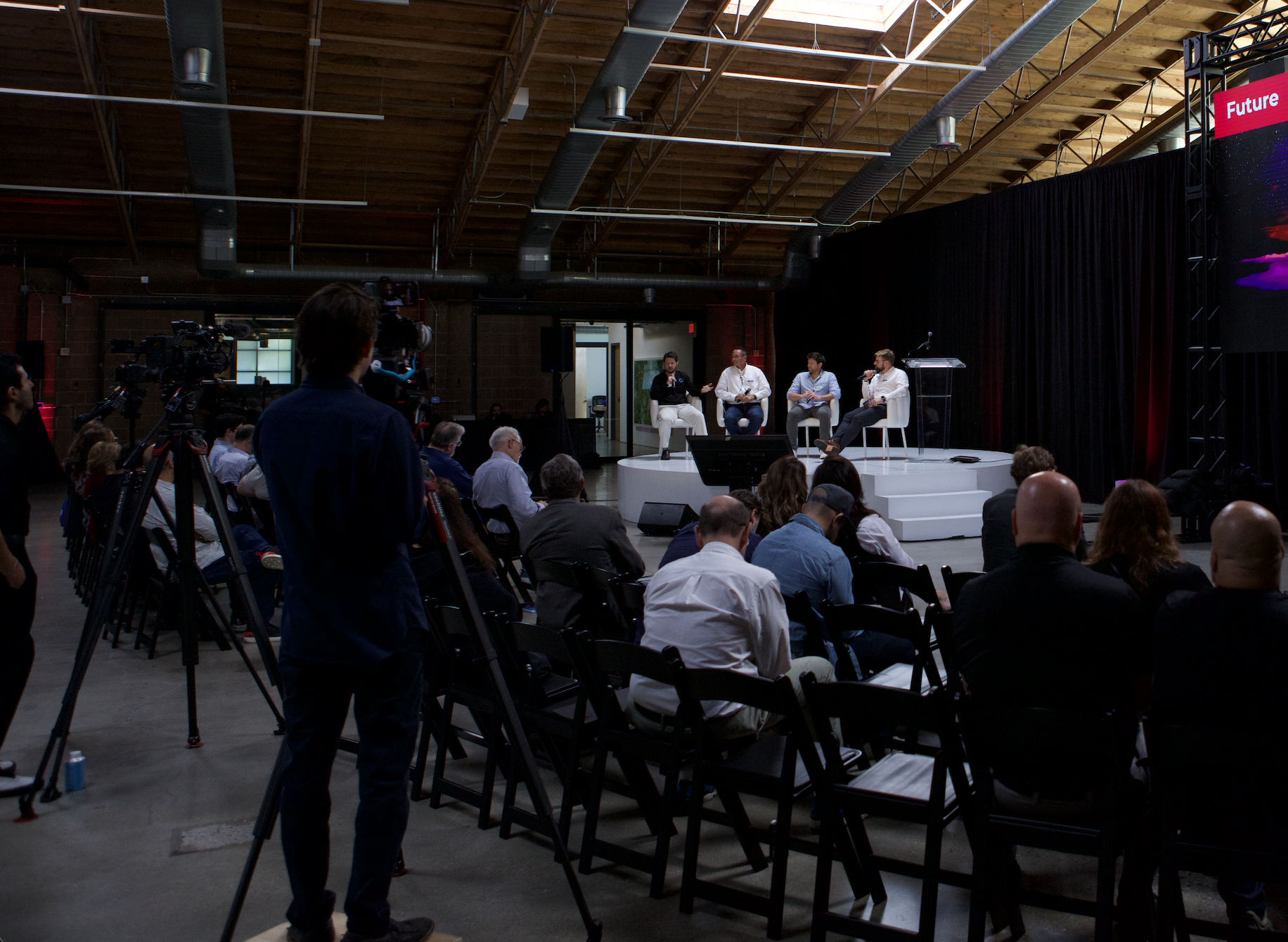
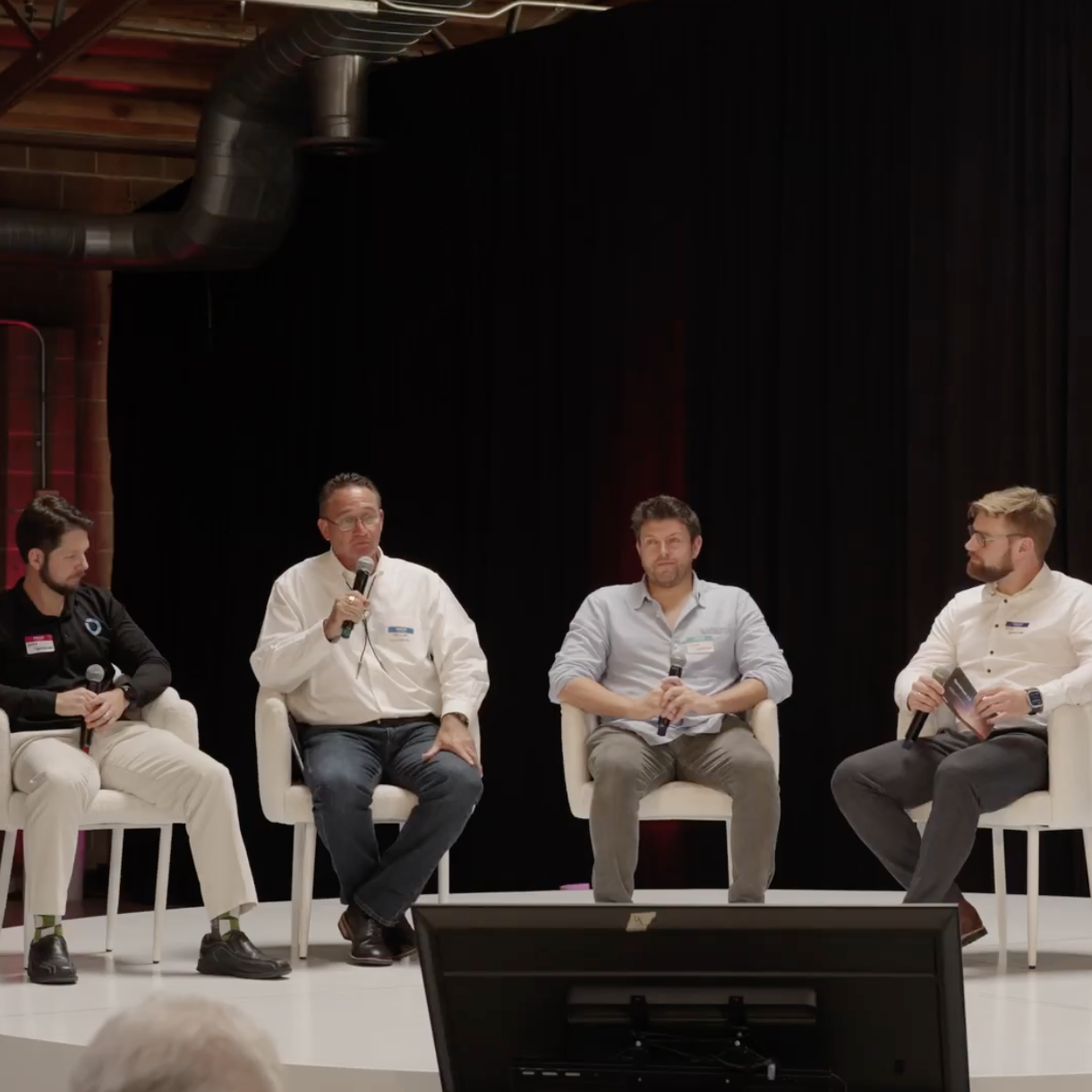
The launch was in Los Angeles during Tech Week. A stage, a camera crew, a hundred guests, and two hours: customer interviews, a live demo by product and the CTO, the vision, and a panel with the CEO, CTO and VP Product, moderated by our founder Felix Rosbach. He built the narrative with the VP Product as one user story, alternating between the customer and the technology, and was still working on the deck with him the night before.
At the start, nobody in the company could have given the same one minute answer to “who is this for, and what does it do”. By launch day, the team could.
What we take into every market entry
Budget for the entry, not only the build
A market you have not sold into before costs money to open. There is no way around it. Without events, outbound and enough exposure to produce real conversations, there is no validation loop, no learning, and in the end no pipeline. We ask about that commitment in the first conversation rather than halfway through the engagement.
The buyer you assume is rarely the buyer you find
Here, thirty conversations moved the target from the obvious business buyer to the team that would actually have to operate the product. Every week that discovery is delayed is a week of building, writing and selling for the wrong person. That is what we mean by de-risking product success.
Narrowing is not losing pipeline
Getting a leadership team from several plausible markets down to one clearly defined ideal customer profile is where most of the resistance sits, and where most of the value is. Focus feels like subtraction until the first conversations land with someone who recognises their own problem, and then buys.
This is also why we sometimes say no. If the commitment to fund the market entry is not there, we would rather say so at the start than take a mandate we cannot deliver.
What the team said
We were building something genuinely new, and we had a lot of opinions in the room about what it should become. Crossing Waters is good at the part most advisors skip: getting senior people who all care to commit to one answer, and then holding them to it for months until we saw traction. Not a deck-and-run consultancy. They were still with us on stage at the launch in Los Angeles. If I am ever in that position again, they are the first call I make.
Trevor J. Morgan, CEO, OpenDrives
Crossing Waters ran the hardest part of the process – the part where product, sales and marketing have to actually agree – every two weeks without letting it slip. They also worked directly with me and my product managers, from practical product management best practices to straight coaching, which is not something you get from most advisors. They may have been outside advisors, but it felt like they were an integral part of the team.
James DiVito, VP Product and Solutions, OpenDrives
What we got was language my team could actually use. Not a document, but a way of describing the product that held up in front of buyers and carried through into the launch. In my experience that is rarer than it should be.
Jason Matousek, Director Channel Revenue, OpenDrives
Download the case study
Case study: OpenDrives Astraeus
From multiple opportunities to product-market fit. PDF, 4 pages.
Work with us
Crossing Waters helps product and Go-To-Market teams sharpen the product, find their ideal market, and then enter it. We run the process, we stay until it holds, and we say no when the conditions are not there. If any of the above sounds like where you are, the first conversation is a short one.